
| Role / Company | Salary Range | Key Requirement |
|---|---|---|
| India average | 9% salary growth | Projected for 2026 |
| Real estate/infrastructure | 10.9% salary growth | Highest sectoral variation cited |
| Technology consulting | 6.8% salary growth | Lowest sectoral variation cited |
| India Inc. / EY Future of Pay 2026 Report | 9.1% salary increase | Projected for 2026 |
| India actual salary growth | 8.9% salary growth | Observed in 2025 |
| Manufacturing and Engineering / Automotive | Around 9.5% increments | Projected to lead salary growth |
Data sourced from top search results. Verify before making decisions.
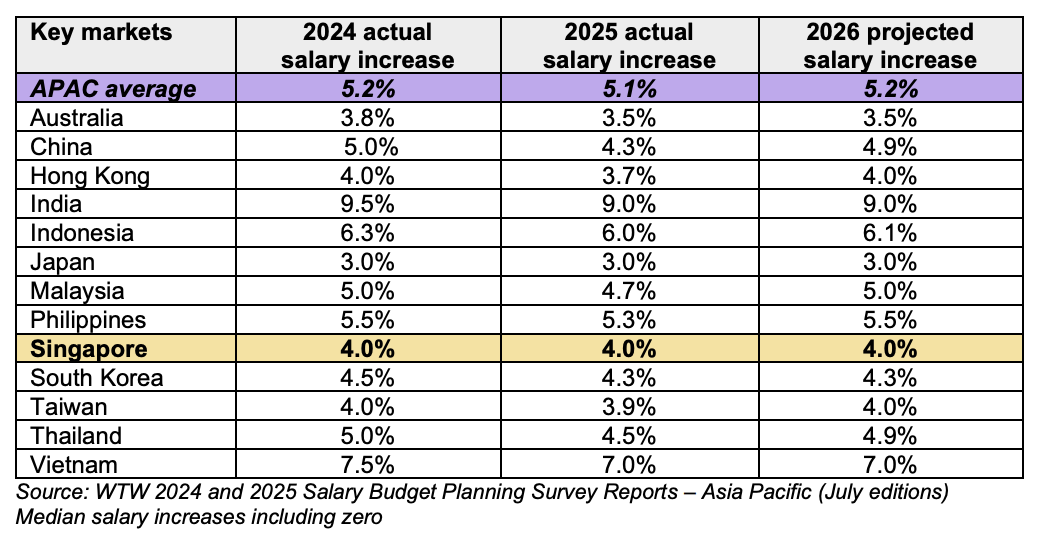
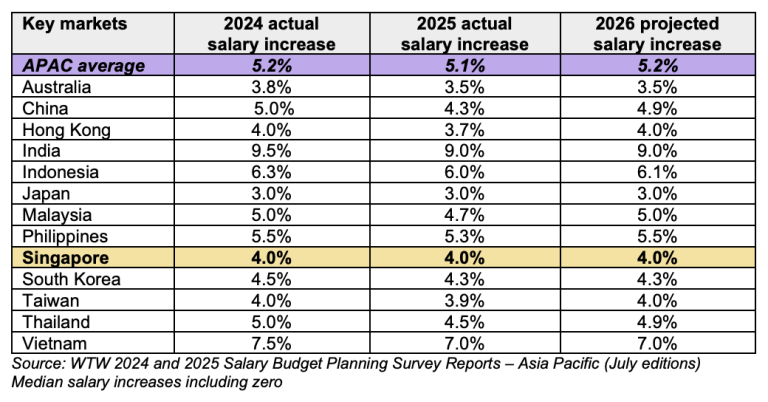
Your 2026 salary hike may look good on paper, but it may not feel big in your bank account. A 9% average salary increase is being talked about for India, yet the real gain will depend on your industry, skills, city, loan costs, and inflation.
The important point is this: 2026 may not reward everyone equally. Companies are expected to become more selective, which means high-skill employees may gain more while average hikes may feel modest for many workers.
What the 2026 Salary Forecast Means for Indian Employees
The latest salary outlook suggests that India Inc. may offer an average hike of about 9% in 2026. This is only a small rise from the actual 2025 salary growth of about 8.9%.
So, this is not a “boom year” for everyone. It is more likely to be a year where companies reward people with the right skills, strong performance, and business impact.
Why a 9% hike may not feel like 9%
A salary increase is not the same as extra spending power. Rent, school fees, fuel, EMIs, insurance, and food prices can reduce the real value of your hike.
If your salary rises by 9%, but your monthly costs rise sharply too, your lifestyle may not improve much. This is why employees should look at net savings after expenses, not just the appraisal letter.
Key Salary Hike Data for 2026 India
| Area | 2026 Salary Outlook | What It Means |
|---|---|---|
| Average India Inc. hike | About 9% to 9.1% | Stable growth, but not a big jump from 2025 |
| 2025 actual salary growth | About 8.9% | 2026 may be only slightly better |
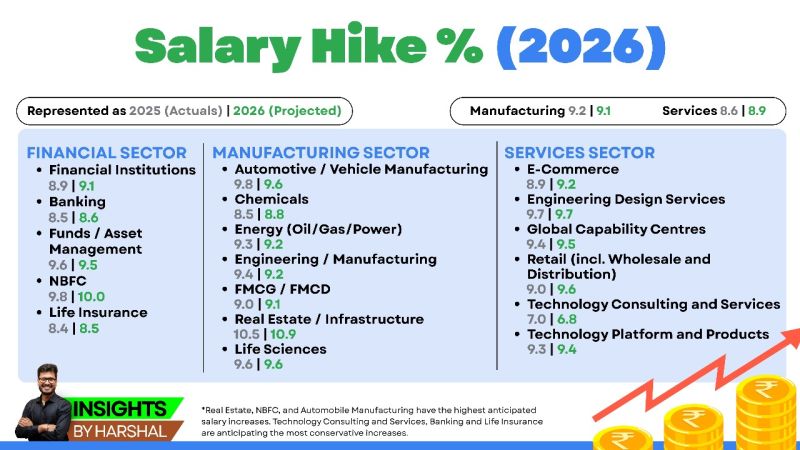
| Real estate and infrastructure | Around 10.9% | One of the stronger sectors for pay growth |
| Technology consulting | Around 6.8% | Lower expected growth compared with many sectors |
Which Sectors May See Better Salary Growth?
The 2026 salary increase forecast shows clear sector differences. Real estate and infrastructure may offer some of the highest average increases, helped by continued project activity and demand for skilled workers.
On the other hand, technology consulting may see softer hikes. This does not mean all tech workers will get low increments, but average growth in this segment may be more controlled.
Skills may matter more than job title
Companies are expected to use more targeted pay models in 2026. This means two people in the same team may get very different hikes based on performance, niche skills, and business value.
Employees with skills in data, automation, product thinking, compliance, project execution, sales growth, and cost control may be in a better position. The message is simple: your skill premium may matter more than the average forecast.
How to Prepare for Your 2026 Appraisal
Do not wait until the appraisal meeting to think about your salary. Start preparing months earlier with proof of your work, market data, and a clear ask.
Step 1: Track your wins
Write down your results every month. Include revenue added, costs saved, projects completed, clients retained, errors reduced, or time saved.
Numbers make your case stronger. Instead of saying “I worked hard,” show how your work helped the company.
Step 2: Compare your pay with the market
Check salary ranges for your role, city, industry, and experience level. A 9% average hike does not mean you should accept 9% if you are underpaid.
If your role is in high demand, you may be able to ask for more. If your sector is slow, focus on skills that can move you into a stronger pay band.
Step 3: Ask for total rewards, not only basic pay
Some companies may control fixed salary but offer bonuses, stock options, retention pay, learning budgets, or flexible benefits. These can still improve your total package.
Ask about variable pay, health cover, leave policy, training support, and promotion timelines. A smart package can be better than a small fixed hike alone.
What This Means for Loans, Rent, and Big Purchases
If you expect a salary hike in 2026, do not spend it before it arrives. Banks and landlords may look at income growth, but your budget should be based on confirmed salary, not hope.
This is especially important if you are planning to buy a home. Before taking a larger EMI, understand current borrowing costs through guides like 7 Key Things to Know About Home Loan Interest Rates in India in May 2026.
If you are deciding whether to rent or buy, your salary hike should be only one part of the decision. Property price, job stability, EMI comfort, and location risk also matter, as explained in Complete Guide to India’s May 2026 Property Market: Home Loan Rates, Rent vs Buy, and RERA Checks.
Government Employees and 2026 Salary Expectations
The corporate salary forecast does not directly apply to government employees. Government pay usually depends on official rules, allowances, pay commission updates, and Dearness Allowance changes.
If you are preparing for public sector roles, compare long-term security, pension benefits where applicable, allowances, and career growth. You can also track upcoming opportunities through 9 Smart Government Job Exams to Track in India 2026: Salary, Eligibility and Last Dates.
7 Smart Moves for Employees in 2026
1. Do not judge your hike alone
Look at your salary after tax, rent, EMI, and monthly costs. Your real income growth is what remains after expenses.
2. Build one high-value skill
Pick one skill that your company truly needs. Complete a course, apply it at work, and show results before appraisal time.
3. Keep your resume ready
Even if you like your job, stay prepared. A strong external offer can help you understand your true market value.
4. Negotiate with proof
Use facts, not emotions. Show business impact, extra responsibility, and market salary data.
5. Avoid lifestyle inflation
If your salary rises, do not increase spending immediately. First raise your emergency fund, insurance cover, or investments.
FAQ: Salary Increase Forecast 2026 India
What is the expected salary increment percentage in India for 2026?
The expected average salary increase in India for 2026 is around 9% to 9.1%. Actual hikes will differ by company, sector, role, and performance.
Which sector may get the highest salary hike in 2026?
Real estate and infrastructure are expected to see stronger salary growth, with estimates around 10.9%. This is higher than the broad India average.
Will technology employees get good hikes in 2026?
Some technology employees may still get strong hikes, especially in high-demand roles. But technology consulting as a segment may see lower average growth of around 6.8%.
Is the 2026 salary forecast the same for government employees?
No. Government salary changes follow official decisions on pay structure, allowances, and related rules. Corporate salary surveys should not be used as a direct guide for government pay.
What should I ask for during my 2026 appraisal?
Ask for a fair raise based on your results, market pay, and added responsibilities. Also discuss bonus, promotion, learning support, and benefits if the fixed hike is limited.
Final Recommendation
Treat the 2026 India salary hike forecast of about 9% as a planning signal, not a promise. Start building proof of your value now, improve one high-demand skill, and enter appraisal season with clear numbers.
If your hike beats inflation and improves savings, use it wisely. If it does not, look for better skills, better roles, or better sectors instead of waiting another year.
“If your hike beats inflation and improves savings, use it wisely.”

*Affiliate link — we may earn a small commission at no extra cost to you.

Millennial writer covering everyday money struggles, price hikes, and life in India through a Gen-Z lens. Writes the way real people talk — no jargon, just facts.