
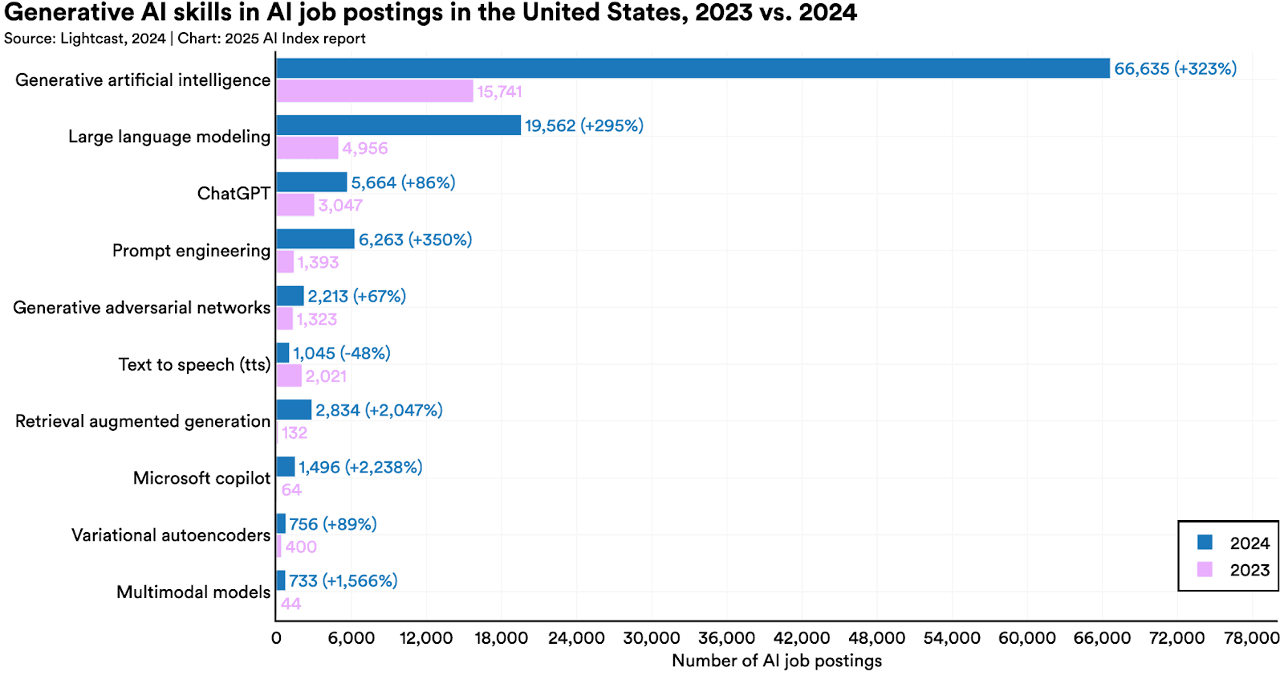
| Role / Company | Salary Range | Key Requirement |
|---|---|---|
| Artificial Intelligence Lead / Adastra | Not specified | Remote; 7–12 Years; Full-Time |
| AI and Data Science Trainer / teonox | Not specified | Kothrud, Pune, Maharashtra; Full-time |
| Agentic Ai Part Time Trainer / Thinkcloudly | Not specified | Remote; Part Time Trainer |
| AI Skills / India article | Not specified | Six skills in demand in 2025 |
| Artificial Intelligence Skills / Article | Not specified | Smartphone technology; Supply-chain automation; Fraud prevention; Energy supply and usage |
Data sourced from top search results. Verify before making decisions.
Many people think AI jobs are only for coders with years of experience. That is not true anymore. Today, companies also need trainers, data helpers, prompt writers, product thinkers, and team leads who understand how AI fits into real work.
The surprising part is this: even part-time and remote roles are opening up in AI training and AI tools. If you build the right mix of skills, you can grow faster in tech, education, marketing, business, and data roles.
Why AI Skills Matter for Job Growth Now
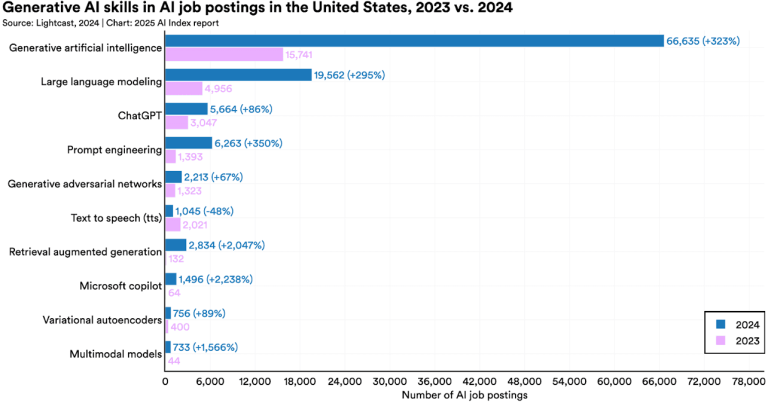
AI is changing how people work in almost every field. Sales teams use it to write emails, teachers use it to plan lessons, software teams use it to test code, and managers use it to study reports faster.
This means AI is no longer just one job title. It is becoming a work skill, like Excel, communication, or problem-solving. People who learn it early can move into better roles with more responsibility.
AI Jobs Are Not All the Same
Some roles need deep technical skills, such as machine learning and model building. Other roles need strong teaching, business, or tool-use skills.
For example, an AI lead role may ask for many years of experience and the ability to guide teams. At the same time, AI trainer roles can focus more on teaching, explaining tools, and helping learners build projects.
9 AI Skills That Help You Grow in Your Career
1. Prompt Writing
Prompt writing means giving clear instructions to AI tools. A good prompt can turn a basic answer into a useful report, email, plan, or code sample.
This skill is useful in marketing, HR, education, customer support, and software work. Clear thinking leads to better prompts, so this is a great starting point for beginners.
2. Data Understanding
AI works with data, so you should know how to read, clean, and understand it. You do not need to become a data scientist on day one.
Start with spreadsheets, charts, basic statistics, and simple dashboards. If you are a fresher in India, you can also explore 7 Money-Making AI and Data Skills Freshers Should Learn in India by 2026 to choose a learning path with better earning potential.
3. Machine Learning Basics
Machine learning is the method that helps systems learn from data. You should understand simple ideas like training data, models, prediction, accuracy, and bias.
You do not need to build complex systems at first. But knowing the basics helps you speak with technical teams and understand how AI products are made.
4. Python for AI Work
Python is one of the most common languages used in AI and data science. It is used for automation, data analysis, machine learning, and small AI projects.
Learn the basics first: variables, loops, functions, files, and libraries like Pandas. After that, try small projects such as a resume scanner, sales report analyzer, or chatbot.
5. AI Tool Fluency
Many jobs now expect you to use AI tools to save time. These tools can help with writing, research, design, coding, meeting notes, and task planning.
Tool fluency means you know which tool to use, when to use it, and how to check the result. For practical options, see 11 Best AI Productivity Tools in 2026 for Work, Study, and Software Teams.
6. Automation Thinking
Automation thinking means spotting boring tasks that can be done faster with tools. This could be sending reports, sorting leads, replying to common questions, or updating sheets.
People who can save time for a team become more valuable. Automation is one of the easiest ways to show business impact.
7. Communication and Teaching
AI trainer roles are growing because many companies and institutes need people who can explain AI in simple words. This is a strong path if you enjoy teaching or mentoring.
You should be able to explain tools, guide projects, answer doubts, and create easy learning plans. Good communication can help you move into trainer, consultant, or team lead roles.
8. Ethics and Responsible Use
AI can make mistakes. It can also give biased or outdated answers if the data or prompt is weak.
That is why companies need people who can check facts, protect private data, and use AI fairly. Responsible AI use builds trust, especially in healthcare, finance, education, and hiring.
9. Project Building
Certificates are useful, but projects prove your skill. A small project can show that you know how to solve real problems.
Build simple projects like a customer feedback analyzer, study planner, job description matcher, or expense tracker. Add screenshots, steps, tools used, and results to your portfolio.
Key AI Skills and Where They Help
| Skill | Best For | Beginner Project Idea |
|---|---|---|
| Prompt Writing | Marketing, support, HR, content | Create 20 useful prompts for office work |
| Data Basics | Business, analytics, finance | Build a sales dashboard in a spreadsheet |
| Python | Tech, data, automation | Make a simple file sorter or report cleaner |
| AI Tool Use | Any office or remote job | Compare 3 tools for one daily task |
| Communication | Training, consulting, team roles | Record a 5-minute AI lesson |
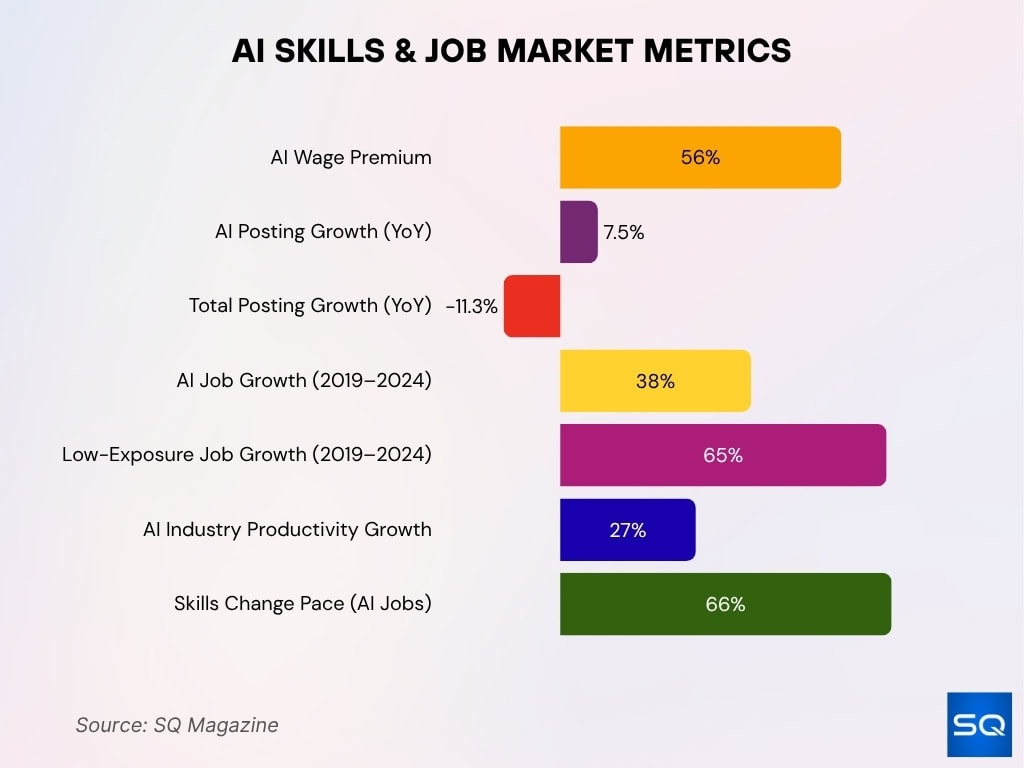
A Simple 30-Day Plan to Build AI Skills
Days 1–7: Learn the Basics
Start with AI terms, prompt writing, and simple tool use. Learn what AI can do and what it cannot do.
Use one AI tool daily for writing, research, or planning. Keep notes on what worked and what failed.
Days 8–15: Add Data Skills
Learn spreadsheet formulas, sorting, filters, charts, and basic data cleaning. These skills help in almost every job.
Take a small dataset and create a simple report. Explain the key findings in plain English.
Days 16–23: Try Python or No-Code Automation
If you like coding, start Python basics. If you do not like coding yet, try no-code automation tools first.
The goal is to save time on one repeated task. This makes your learning practical and job-ready.
Days 24–30: Build and Share One Project
Choose one problem and solve it using AI, data, or automation. Keep the project small but clear.
Share it on your resume, LinkedIn, or portfolio. Mention the problem, tools used, steps, and result.
How to Choose the Right AI Skill for Your Career
If you are from a non-tech background, start with prompt writing, AI tools, data basics, and communication. These skills can help in business, teaching, operations, HR, and marketing roles.
If you want a technical career, focus on Python, machine learning basics, data science, and projects. For freshers planning a serious path, 7 Money-Making AI and Data Skills Freshers Should Learn in India by 2026 can help you compare options.
If you already have experience, learn how to lead AI projects. Companies value people who can connect business goals with the right tools and guide a team.
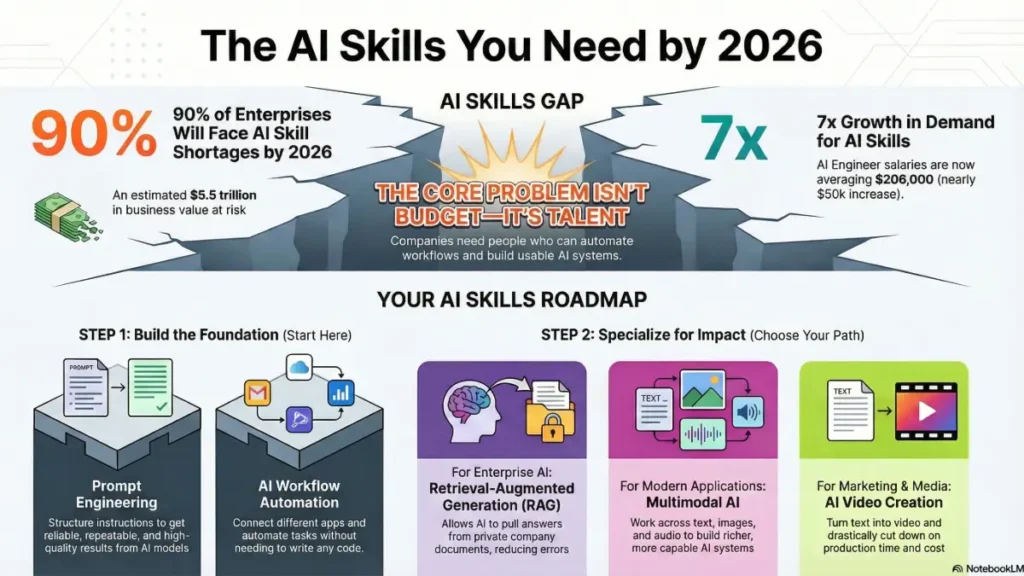
FAQ
What AI skills are required for beginners?
Beginners should learn prompt writing, AI tool use, data basics, and simple automation. These skills are easy to start and useful in many jobs.
Which AI skills are most in demand?
Data analysis, Python, machine learning basics, prompt writing, automation, and AI product thinking are in strong demand. Communication is also important because teams need people who can explain AI clearly.
Do I need coding to get an AI-related job?
Not always. Coding helps for technical roles, but many AI-related jobs need tool knowledge, training ability, data understanding, and business problem-solving.
What AI skills should I learn for the future?
Learn skills that combine human judgment with smart tools. Focus on data thinking, responsible AI use, automation, and the ability to keep learning new tools.
Can AI skills help freshers get better jobs?
Yes. Freshers can stand out by showing small projects, tool knowledge, and data skills. Employers like candidates who can prove they can solve real problems.
Final Recommendation
Do not try to learn every AI skill at once. Pick one path based on your goal: tool skills for office growth, data skills for analytics, Python for technical roles, or communication for training jobs.
Start with one useful project this week. The fastest way to grow with AI is to solve real problems, show your work, and keep improving your skills every month.
*Affiliate link — we may earn a small commission at no extra cost to you.
“*Affiliate link — we may earn a small commission at no extra cost to you.”

Bilingual content writer covering fintech, credit cards, and personal finance for readers in India, Brazil, and beyond. Believes financial literacy has no borders.