

The cellular health supplement market is moving from niche “biohacker” territory into the mainstream wellness aisle. What used to be a conversation about anti-aging clinics and longevity forums is now showing up in everyday searches for NAD+, mitochondrial support, CoQ10, NMN, resveratrol, and healthy aging stacks.

Here’s the big shift: consumers are no longer buying supplements only for energy or immunity. They’re buying into cellular health, longevity, metabolic resilience, and age-management—and that is changing how brands, retailers, investors, and buyers should read the market.
| Market Indicator | Latest/Forecast Value | What It Means |
|---|---|---|
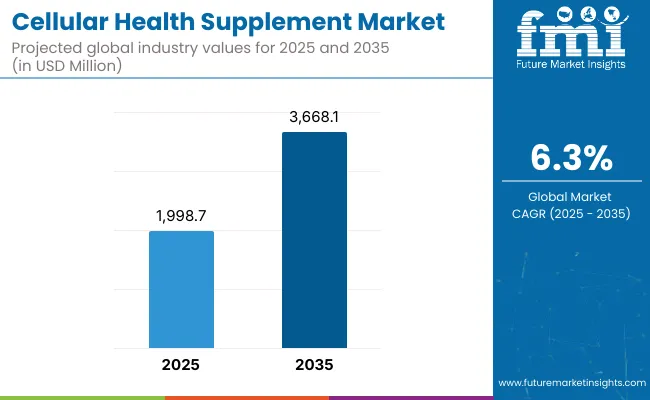
| Cellular health supplement market size | USD 1,998.7 million in 2025 | Still specialized, but gaining mainstream traction |
| 2035 forecast | USD 3,668.1 million | Long-term expansion driven by longevity and wellness demand |
| Implied CAGR | Approx. 6.3% from 2025-2035 | Healthy growth, with faster pockets in NAD+, mitochondrial, and premium formulations |
| Global dietary supplements market | Nearly USD 152 billion in 2021 | Cellular health is a premium subcategory within a much larger supplement economy |
What Are Cellular Health Supplements?
Cellular health supplements are products positioned to support the body at the cell level—usually by targeting mitochondrial function, oxidative stress, NAD+ pathways, inflammation balance, detoxification, and healthy aging. They are often marketed as longevity supplements, energy support supplements, or metabolic wellness products.
Common ingredients include:
- CoQ10 for mitochondrial energy support (check current price on Amazon)
- NAD+ precursors such as NR or NMN (check current price on Amazon)
- Resveratrol and polyphenols for healthy aging positioning (check current price on Amazon)
- Alpha-lipoic acid for antioxidant support (check current price on Amazon)
- Omega-3s for inflammation and heart-health adjacency (check current price on Amazon)
- Glutathione or glutathione-support nutrients for cellular defense (check current price on Amazon)
The key distinction is positioning. A basic multivitamin says “fill nutrient gaps.” A cellular health supplement says support the systems that help cells perform, repair, and age better.
Market Forecast 2026-2035: The Growth Story
The market is expected to move from early mass adoption to broader category maturity between 2026 and 2035. The forecasted rise from USD 1,998.7 million in 2025 to USD 3,668.1 million in 2035 reflects a solid expansion curve, especially as consumers connect supplement use with healthy aging, fitness recovery, focus, and preventive wellness.
Some reports cite a 23.10% CAGR for the cellular health supplement market. That figure likely reflects a narrower or faster-growing segment—such as NAD+ boosters, premium longevity blends, direct-to-consumer brands, or emerging markets—rather than the full global cellular health supplement category over a decade. For strategic planning, it is smarter to separate the market into:
- Core market: mature products such as CoQ10, omega-3s, antioxidants, and multinutrient cellular support.
- High-growth market: NAD+, NMN, NR, senolytic-inspired blends, and premium longevity stacks.
- Clinical/premium market: practitioner-led, personalized, subscription-based, and biomarker-driven supplements.
Key Drivers Behind the Cellular Health Supplement Market
1. Healthy Aging Is Becoming a Mainstream Goal
The biggest driver is simple: people want to live longer, but they also want to feel better while aging. The market is benefiting from the shift from “anti-aging” language to healthspan, longevity, vitality, and cellular resilience. This aligns with broader interest in longevity trends and preventive wellness.
2. The U.S. Supplement Market Is Approaching Massive Scale
The U.S. dietary supplement industry is often discussed as approaching the USD 70 billion range, depending on category definitions and forecast year. This matters because the U.S. remains one of the most influential markets for premium supplement launches, influencer-led wellness brands, subscription models, and clinical-grade formulas.
3. Consumers Are More Educated Than Before
Searches around “new supplements on the market,” “dietary supplement news,” and “health trends linked to supplements” show that buyers are actively researching ingredients before purchasing. That creates opportunity for brands that can explain benefits clearly without overpromising.
4. Direct-to-Consumer Brands Are Accelerating Adoption
Subscription supplement brands, longevity startups, wellness newsletters, podcasts, and health tracking apps have made cellular health feel more accessible. Instead of selling one bottle, many brands now sell monthly protocols: NAD+ support, antioxidant support, sleep optimization, metabolic health, and exercise recovery.

Market Restraints: What Could Slow Growth?
The outlook is strong, but not risk-free. The main restraints include:
- Regulatory pressure: Claims around anti-aging, disease prevention, and cellular repair can attract scrutiny.
- Consumer skepticism: Premium longevity supplements are expensive, and buyers want proof.
- Ingredient controversy: Some compounds, especially in the NAD+ space, face changing regulatory or scientific debate.
- Quality issues: Poor testing, underdosing, and exaggerated claims can damage category trust.
- Economic pressure: Cellular health supplements are often discretionary premium purchases.
For consumers, the practical rule is: choose third-party tested products, transparent labels, realistic claims, and reputable brands. For companies, trust will be the biggest competitive advantage.
End-Use Sectors: Where Demand Is Coming From
The cellular health supplement market is not driven by one buyer type. Demand is spread across multiple end-use sectors:
- General consumers: People buying longevity, energy, and wellness products online or in retail stores.
- Sports and fitness users: Athletes interested in recovery, mitochondrial efficiency, and oxidative stress support. See also sports performance trends.
- Older adults: A major demographic for CoQ10, NAD+ support, antioxidants, and healthy aging blends.
- Practitioner channels: Functional medicine, integrative clinics, nutritionists, and wellness centers.
- Corporate wellness: Employers exploring preventive health, productivity, and wellness benefits.
Regional Outlook: Who Leads the Market?
North America
North America is expected to remain a leading market thanks to high supplement spending, direct-to-consumer distribution, premium wellness culture, and strong demand for longevity products. The U.S. is especially important for product innovation and branding.
Europe
Europe has strong potential, but claims regulation is stricter. Brands must be careful with health claims and scientific substantiation. Consumers in countries such as Germany, the UK, France, and the Nordics are receptive to preventive wellness but often expect higher evidence standards.
Asia-Pacific
Asia-Pacific may be one of the most exciting growth regions through 2035. Aging populations, rising disposable income, e-commerce growth, and strong beauty-from-within demand all support expansion. Japan, South Korea, China, Australia, and Singapore are key markets to watch.
Latin America and Middle East
These regions are earlier in adoption but offer long-term upside. Growth will likely be strongest in urban, higher-income consumer groups and through pharmacy, e-commerce, and premium wellness channels.
Comparison: Leading Cellular Health Supplement Categories
| Category | Main Consumer Appeal | Market Outlook |
|---|---|---|
| NAD+ Support: NMN/NR | Longevity, energy, cellular metabolism | High-growth but needs regulatory and evidence clarity |
| CoQ10 | Heart health, mitochondrial energy, aging support | Mature, trusted, steady demand |
| Resveratrol/Polyphenols | Healthy aging and antioxidant positioning | Strong branding appeal, competitive category |
| Glutathione Support | Cellular defense, detox, antioxidant support | Growing, especially in premium wellness and beauty markets |
| Multi-Ingredient Longevity Blends | Convenience and complete protocol positioning | Strong DTC potential but quality varies widely |

Winning Strategies for Brands and Investors
If you are evaluating this market from a business or investment angle, the winning plays are clear:
- Prioritize proof: Clinical data, third-party testing, and transparent dosing matter more than flashy labels.
- Own a specific use case: Energy, aging, recovery, metabolic health, or beauty-from-within.
- Build trust with education: Consumers want understandable science, not exaggerated claims.
- Use subscriptions carefully: Recurring revenue is powerful, but only if customers feel real value.
- Watch sustainability: Packaging, sourcing, and supply chain transparency are increasingly important. Related: sustainable consumer products.
FAQ
What are the newest supplements in the cellular health market?
The fastest-moving areas include NAD+ precursors such as NMN and NR, senolytic-inspired formulas, advanced glutathione products, mitochondrial blends, and personalized supplement packs based on health goals or biomarker testing.
Is the supplement industry still growing?
Yes. The broader dietary supplement industry continues to grow globally, with the overall market estimated at nearly USD 152 billion in 2021. Cellular health is a smaller but premium segment benefiting from longevity and preventive wellness trends.
What health trend is most linked to cellular health supplements?
The strongest trend is longevity and healthspan. Consumers are increasingly interested in products that support aging well, daily energy, recovery, and metabolic function rather than only treating short-term wellness needs.
Are cellular health supplements worth buying?
They can be worth considering if you choose evidence-backed ingredients, avoid unrealistic claims, and use them alongside sleep, exercise, nutrition, and medical guidance. CoQ10, omega-3s, and some antioxidant nutrients have more established consumer trust than many newer longevity compounds.
What should buyers look for before purchasing?
Look for third-party testing, clear ingredient doses, reputable manufacturing, realistic claims, and transparent labeling. Avoid products that promise to reverse aging, cure disease, or deliver dramatic results without evidence.
Final Verdict: The Market Is Real, But Quality Will Decide the Winners
The world cellular health supplement market is set for steady long-term growth, with particularly strong momentum in NAD+ support, mitochondrial health, antioxidant defense, and longevity-positioned formulas. The forecast from USD 1,998.7 million in 2025 to USD 3,668.1 million by 2035 points to a durable category, not a passing fad.
For consumers, the smartest move is to start with trusted, third-party tested basics like CoQ10, omega-3s, and well-formulated antioxidant support before chasing every new trend. For brands and investors, the opportunity is attractive—but the winners will be the companies that combine credible science, clean positioning, regulatory discipline, and genuine consumer trust.
“For consumers, the smartest move is to start with trusted, third-party tested basics like CoQ10, omega-3s, and well-formulated antioxidant support before chasing every new trend.”
Recommended Productivity Gear
*Affiliate link — we may earn a small commission at no extra cost to you.