
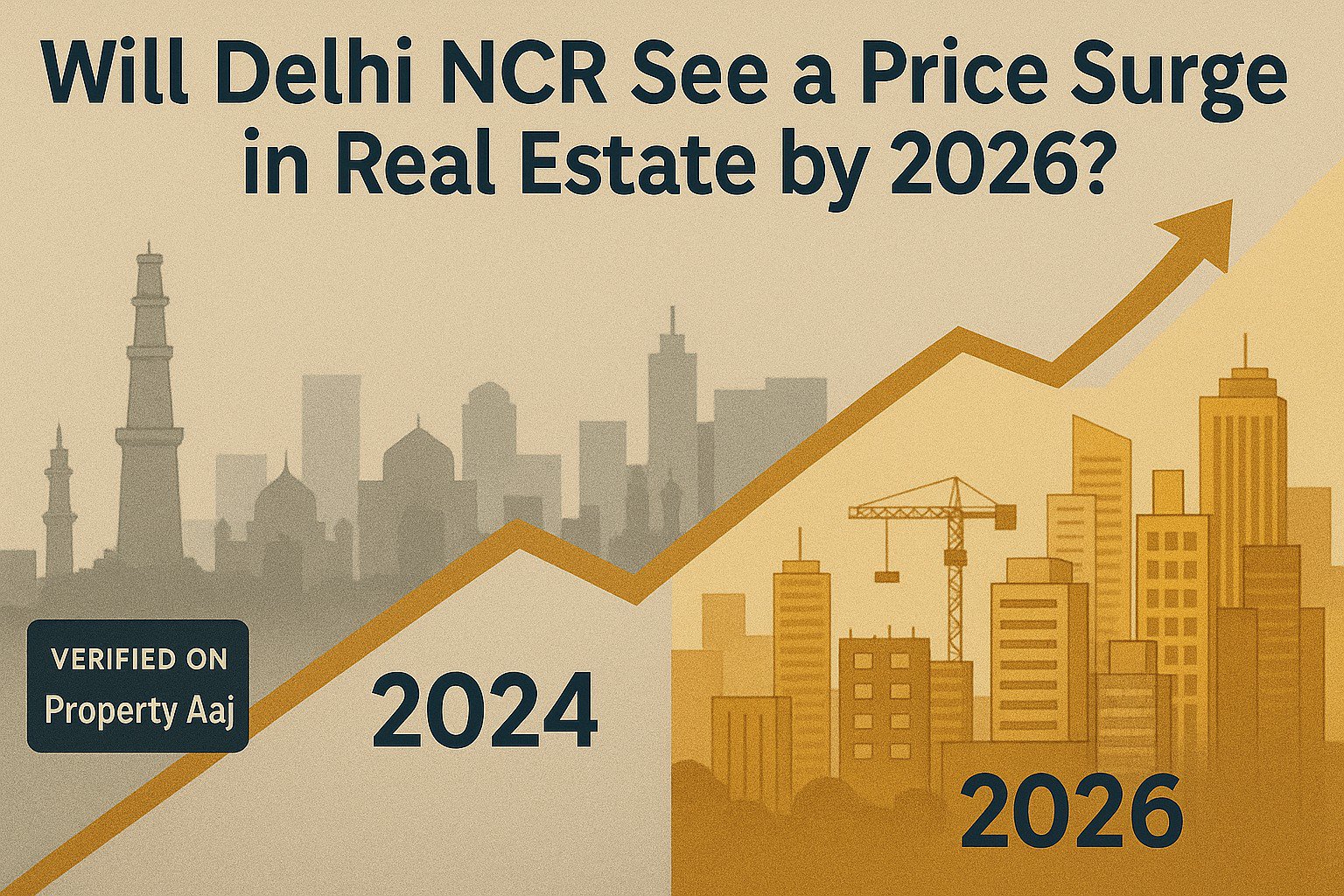
Delhi NCR home prices have climbed so fast that many families now feel stuck. They want to buy, but they also fear paying the highest price of the cycle.
Here is the surprising part: prices in Delhi NCR have risen strongly over the last five years, yet many real buyers are still waiting on the side. So the big question is not only “Will prices fall?” It is also “Can you afford to wait?”
1. The 2026 Market Is Strong, But Not Simple
Delhi NCR property prices are not behaving like a weak market. In many good locations, prices are still firm, especially in premium projects, ready-to-move homes, and areas with better roads, metro links, schools, and offices.
At the same time, buyers have become more careful. People are asking about total cost, loan EMI, builder record, resale value, and monthly maintenance before signing a cheque.
Why This Feels Confusing
On one side, sellers talk about rising prices. On the other side, buyers are waiting for a price correction. This creates a market where good homes sell fast, but average homes may stay unsold for longer.
This is why you should not judge the whole Delhi NCR market as one single market. Gurgaon, Noida, Greater Noida, Faridabad, Ghaziabad, and Delhi all move differently.
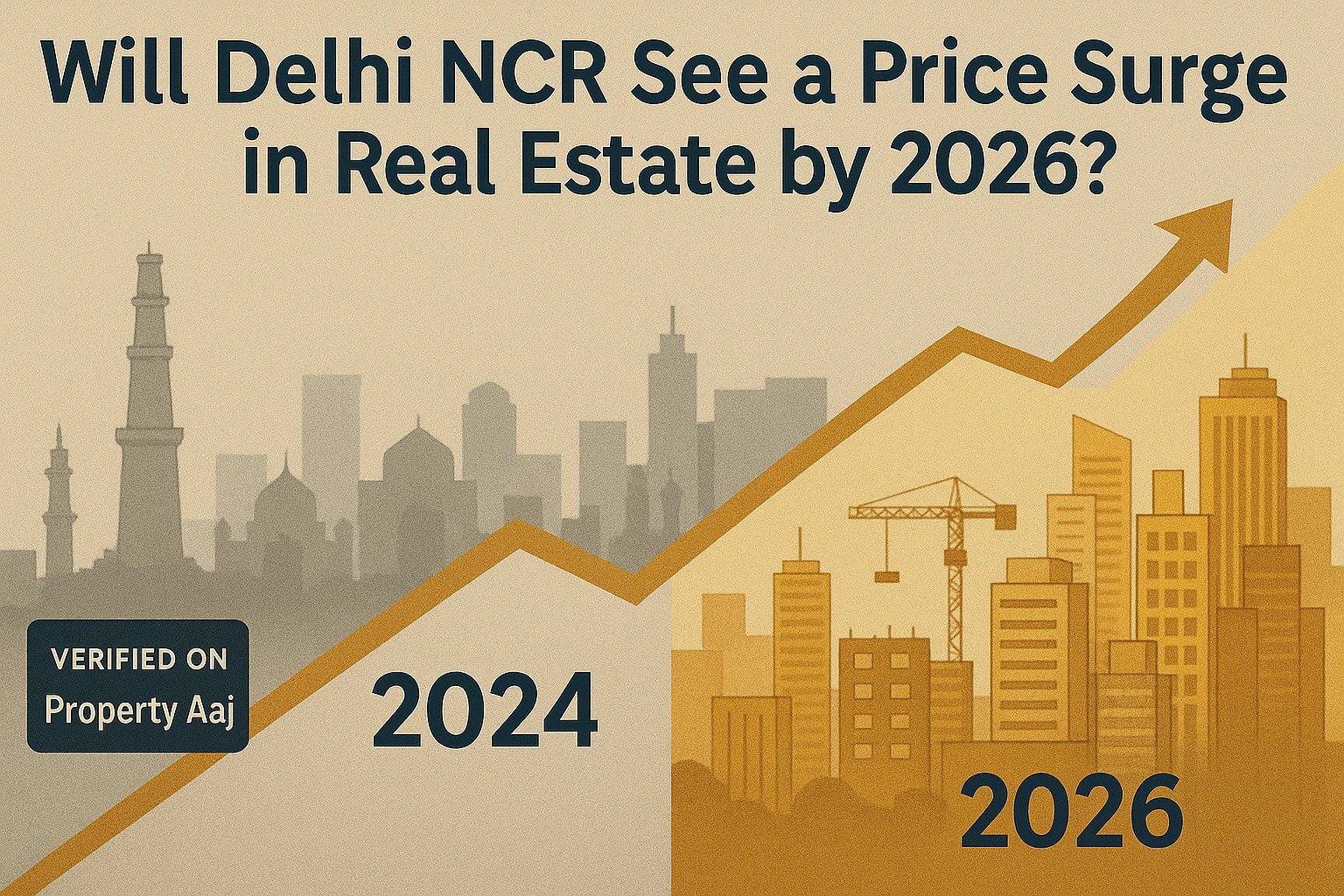
2. Key Data: What the Numbers Suggest
Recent market reports show that Delhi NCR residential prices have seen a major jump over the last five years. Some estimates point to an increase of around 81% in five years, which explains why buyers feel prices are stretched.
| Market Signal | What It Means for Buyers |
|---|---|
| Prices near 5-year highs | Bargains are harder to find in prime locations |
| Buyer activity is more selective | Weak projects may offer better negotiation |
| Loan EMIs remain a big factor | Affordability matters more than headline price |
| Ready homes are in demand | People want lower delivery risk |
The data does not clearly say that a big crash is coming. It says the market has become expensive, and buyers must be sharper than before.
3. Will Property Prices Decrease in 2026?
A full market-wide fall in Delhi NCR prices looks unlikely unless there is a major shock, sharp job slowdown, or big rise in home loan rates. But small corrections can happen in certain pockets.
For example, areas with too much new supply, poor connectivity, or delayed projects may see discounts. Sellers in such markets may cut prices or offer freebies like parking, club membership, or lower floor rise charges.
Correction May Not Mean a 20% Crash
Many buyers hear “correction” and expect prices to drop heavily. In real estate, a correction can also mean prices stay flat for 12 to 18 months while income catches up.
So if you are waiting for a big fall in a top Gurgaon or South Delhi micro-market, you may be disappointed. But if you are flexible on location, you may still find better value.
4. Is It the Right Time to Buy Property in Delhi NCR?
It depends on why you are buying. If you need a home for your family, school access, office travel, or long-term stability, the right time is when the home fits your budget and life plan.
If you are buying as an investor, you need to be more strict. After a strong five-year price rise, future gains may be slower in some areas.
Buy Now If These 4 Things Are True
You can consider buying in 2026 if your EMI is comfortable, your job or business income is stable, and you plan to hold the property for at least 7 to 10 years.
Also, buy only if the project has clear approvals, good builder history, and real demand in that location. A cheap flat in a weak location is not always a good deal.
Wait If These 4 Things Are True
You should wait if your down payment is not ready, your EMI will cross a safe limit, or you are depending on short-term resale profit.
You should also wait if you are buying because of fear. FOMO is not a buying strategy. It often leads to poor choices.
5. The EMI Test: Prices Are Only Half the Story
Many buyers focus only on the flat price. But the real question is: can you carry the EMI, maintenance, registration cost, interiors, moving cost, and emergency savings?
Before booking a flat, run a full cost check. This is especially important in 2026 because high prices make even a small mistake expensive.
If you want a simple checklist, read 9 Smart Checks Before You Buy a Flat in May 2026: Rates, Rent and Real Costs. It can help you compare EMI, rent, and hidden costs before you commit.
Simple EMI Rule
Try to keep your home loan EMI below 35% to 40% of your monthly take-home income. If you have other loans, stay closer to 30%.
Also keep at least 6 months of expenses in an emergency fund after paying the down payment. Do not empty your savings just to book a bigger flat.
6. Where Buyers May Find Better Value
Prime areas have already seen strong price growth. So buyers looking for value may need to study developing pockets, resale homes, and projects near upcoming infrastructure.
But do not buy only because a new expressway, metro line, or airport is planned. Check what is already working today.
Better Value Can Come From Resale Homes
In some sectors, resale flats may offer better prices than new launches. You may also get faster possession and see the actual flat, tower, society, and maintenance level.
However, check building age, pending dues, transfer charges, and legal papers. A lower price is useful only when the paperwork is clean.
7. Step-by-Step Guide: Buy Now or Wait?
Use this simple process before making a decision in Delhi NCR property in 2026.
Step 1: Decide Your Purpose
If it is for self-use, comfort and stability matter. If it is for investment, rental yield and exit price matter more.
Step 2: Fix Your Real Budget
Add stamp duty, registration, GST if applicable, brokerage, interiors, parking, and maintenance deposit. Your real cost can be much higher than the brochure price.
Step 3: Compare Rent vs EMI
If EMI is double or triple your current rent, ask if the lifestyle upgrade is worth it. For a deeper check, use 5 Money Tests Before You Stop Renting in May 2026.
Step 4: Study the Micro-Market
Check recent resale prices, rental demand, nearby offices, schools, hospitals, and travel time. Do not depend only on builder claims.
Step 5: Negotiate Hard
Even in a rising market, negotiation is possible. Ask for a better base price, free parking, lower payment plan burden, or waiver of some charges.
FAQ: Delhi NCR Property Prices 2026
Will property prices decrease in 2026?
A large fall across Delhi NCR is not very likely if demand and incomes stay stable. But some locations with high supply or weak projects may see discounts or flat prices.
Will property prices increase in 2026?
Prices may still rise in strong locations with limited supply, good connectivity, and ready-to-move demand. But the pace may be slower than the last five years.
Is it better to buy in Gurgaon or Noida in 2026?
Gurgaon may suit buyers focused on corporate jobs and premium housing. Noida may suit buyers looking for planned sectors, newer supply, and sometimes better ticket sizes. The right choice depends on your work location and budget.
Should I wait for a correction before buying?
Wait if your finances are weak or you are not sure about the location. Do not wait only because everyone is talking about a correction, especially if you found a good home within budget.
Are Delhi property prices going to rise?
Many parts of Delhi have limited new supply, so good properties can stay expensive. But old buildings, poor locations, or overpriced listings may not rise much.
Final Recommendation: Buy Selectively, Not Blindly
If you are buying a home to live in and your EMI is safe, buy in 2026 only after strong due diligence. Do not wait forever for a crash that may not come in the location you want.
If you are an investor, be patient and price-sensitive. After a sharp rise in Delhi NCR property prices, the easy money phase may be over in many pockets.
The best move is clear: buy a good property in a good location at a fair price. Avoid weak projects, stretched EMIs, and emotional decisions.
*Affiliate link — we may earn a small commission at no extra cost to you.
“*Affiliate link — we may earn a small commission at no extra cost to you.”

Bilingual content writer covering fintech, credit cards, and personal finance for readers in India, Brazil, and beyond. Believes financial literacy has no borders.