
By Dev Kapoor
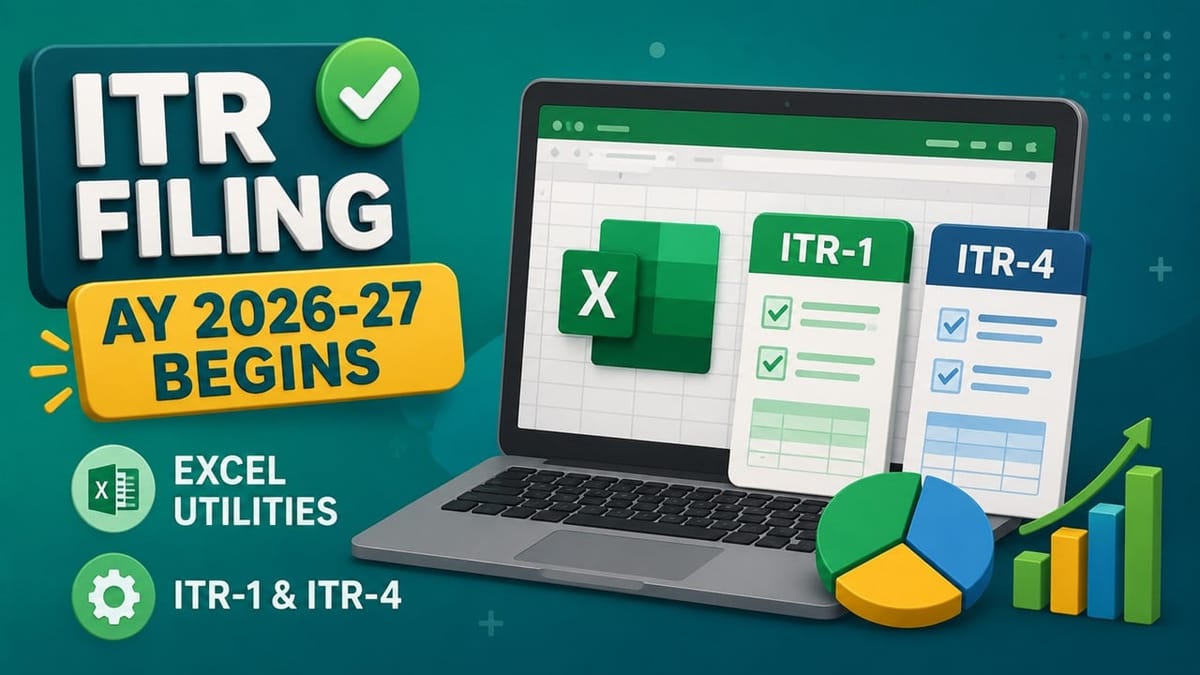
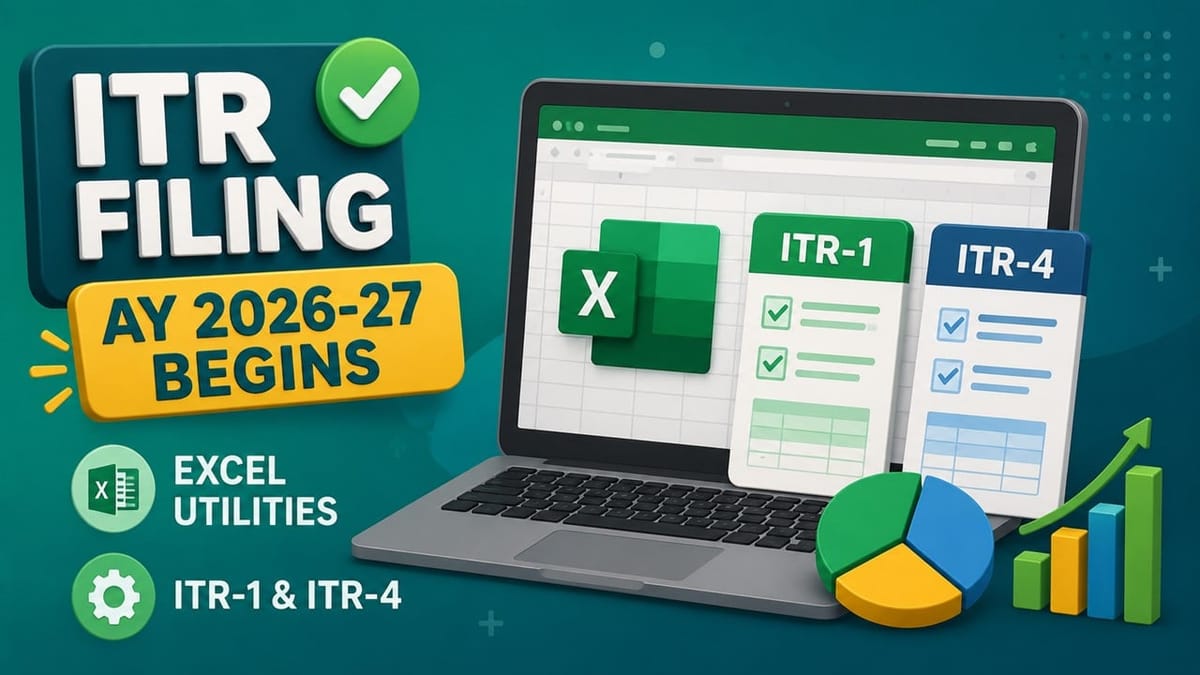
Good news for early tax filers: Excel utilities and online filing for ITR-1 and ITR-4 for AY 2026-27 are now available on the Income Tax e-Filing portal. That means salaried taxpayers, pensioners, small business owners, and eligible professionals do not have to wait until the last-minute July rush to start their return.
If you have ever scrambled for Form 16, bank interest details, deductions, and AIS mismatches a week before the deadline, this is your sign to begin now. Filing early gives you more time to fix errors, claim eligible deductions correctly, and avoid portal congestion closer to the due date.
| Item | Latest Status for AY 2026-27 | Who It Helps |
|---|---|---|
| ITR-1 Excel Utility | Available on e-Filing portal | Salaried individuals, pensioners, eligible resident taxpayers |
| ITR-4 Excel Utility | Available on e-Filing portal | Presumptive taxation taxpayers, small businesses, eligible professionals |
| Online Filing | Enabled for ITR-1 and ITR-4 | Taxpayers who want to file directly without downloading Excel |
What Has Been Enabled on the e-Filing Portal?
The Income Tax e-Filing portal has enabled both Excel utilities and online filing options for ITR-1 and ITR-4 for Assessment Year 2026-27. AY 2026-27 relates to income earned during Financial Year 2025-26.
This is especially useful because many taxpayers prefer to prepare their return offline first, check numbers properly, and then upload the final file. Others may choose online filing because it is faster and pre-filled with data from sources such as salary, TDS, interest income, AIS, and Form 26AS.
If you are planning your wider money tasks this year, also check our guide on personal finance planning and this helpful explainer on tax-saving investments.
ITR-1 vs ITR-4: Which Form Should You Use?
Choosing the wrong ITR form can lead to a defective return notice or extra back-and-forth with the tax department. So before you download anything, make sure you are using the right form.
Use ITR-1 if you are a salaried or pension income taxpayer
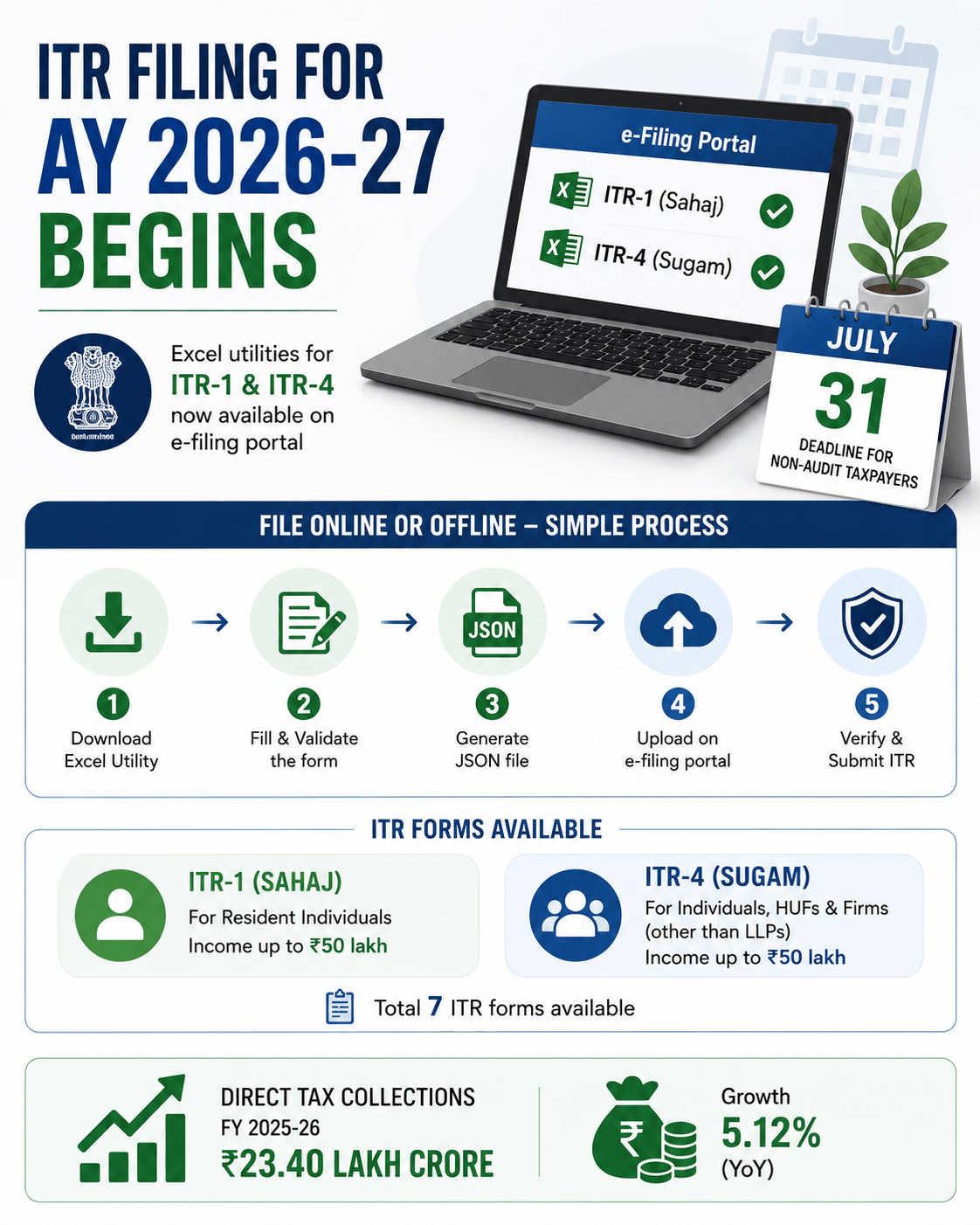
ITR-1, also called Sahaj, is generally meant for resident individuals with total income up to Rs 50 lakh from simple sources.
You may be able to use ITR-1 if your income includes:
- Salary or pension income
- Income from one house property
- Income from other sources, such as bank interest
- Agricultural income up to Rs 5,000
However, ITR-1 is not suitable for everyone. You usually cannot use it if you have capital gains, income from business or profession, more than one house property, foreign assets, or are a director in a company.
Use ITR-4 if you have presumptive business or professional income
ITR-4, also called Sugam, is mainly for eligible taxpayers using the presumptive taxation scheme. This usually includes small businesses and professionals filing under sections such as 44AD, 44ADA, or 44AE.
ITR-4 may apply if you are:
- A resident individual, HUF, or firm other than LLP
- Reporting presumptive business income
- Reporting presumptive professional income
- Within the prescribed income and eligibility limits
If you have complex income sources, capital gains, foreign income, or need to maintain detailed books, ITR-4 may not be the right form.
Excel Utility vs Online Filing: Which Is Better?
Both options are official and valid. The better choice depends on your comfort level and the complexity of your return.
| Option | Best For | Watch Out For |
|---|---|---|
| Excel Utility | Taxpayers who want to work offline, review numbers slowly, and keep a prepared file | You must download the correct utility and upload/submit accurately |
| Online Filing | Simple returns with salary, pension, interest income, and standard deductions | Do not blindly accept pre-filled data without checking AIS and Form 26AS |
| Tax Professional | Complex cases involving business income, capital gains, foreign assets, or notices | Costs more, but can prevent expensive mistakes |
If you prefer a clean offline workflow, use a laptop or desktop with updated spreadsheet software such as Microsoft Excel (check current price on Amazon). For simple salary returns, the online mode is usually faster and easier.
How to Download the ITR-1 or ITR-4 Excel Utility
Here is the simple route most taxpayers can follow:
- Go to the official Income Tax e-Filing portal: incometax.gov.in.
- Open the Downloads section.
- Select Income Tax Returns.
- Choose Assessment Year 2026-27.
- Download the Excel utility for ITR-1 or ITR-4, depending on your eligibility.
- Fill in your details, validate the sheets, generate the required file, and proceed with filing.
Before uploading, make sure the data matches your AIS, TIS, Form 26AS, Form 16, bank statements, and investment proofs. A mismatch does not always mean your return is wrong, but unexplained differences can trigger questions later.
Documents to Keep Ready Before Filing
Even if the utility is available, do not start randomly entering numbers. Keep your basic documents ready first.
- PAN and Aadhaar details
- Form 16 from your employer
- Form 26AS and AIS/TIS from the e-Filing portal
- Bank interest certificates
- Home loan interest certificate, if applicable
- Rent receipts, if claiming HRA
- Proof of deductions under sections such as 80C, 80D, and 80G
- Details of business receipts and expenses if using ITR-4
If you track your spending and tax-saving investments throughout the year, filing becomes much easier. You may also like our guide on best smartphones for productivity if you manage finance apps, bank alerts, and document scans from your phone.
Common Mistakes to Avoid While Filing ITR in 2026
The most expensive tax filing mistakes are often small and avoidable. Watch out for these:
- Selecting the wrong ITR form, especially between ITR-1 and ITR-4.
- Ignoring income shown in AIS, such as bank interest or dividend income.
- Forgetting to verify the return after filing.
- Claiming deductions without valid proof.
- Not reporting all bank accounts correctly.
- Using the Excel utility without updating macros or enabling required settings safely.
Also remember: filing is not complete until your return is e-verified. You can usually e-verify through Aadhaar OTP, net banking, bank account EVC, demat account EVC, or other available methods on the portal.
Should You File Now or Wait?
If your salary details, Form 16, AIS, and bank interest information are already available, filing early is a smart move. You get more time to spot errors, resolve mismatches, and avoid the last-week traffic surge on the portal.
However, if your Form 16 is not yet issued or your AIS is still updating, wait until your key tax documents are complete. Filing too early with incomplete data can create extra work later.
FAQ
Is the Excel utility for ITR-1 available for AY 2026-27?
Yes. The Excel utility for ITR-1 for AY 2026-27 has been enabled on the Income Tax e-Filing portal, along with online filing.
Is ITR-4 available for online filing for AY 2026-27?
Yes. Online filing and the Excel utility for ITR-4 are available for eligible taxpayers on the e-Filing portal.
What is the due date for filing ITR for FY 2025-26?
For most individual taxpayers not requiring audit, the usual due date is expected to be July 31, 2026, unless the government announces an extension or a different notified date.
Can salaried employees use ITR-4?
Usually, salaried employees with simple income use ITR-1. ITR-4 is mainly for eligible taxpayers with presumptive business or professional income. If you have both salary and presumptive income, check eligibility carefully before choosing the form.
Should I use Excel utility or file online?
Use online filing if your return is simple and pre-filled data is mostly correct. Use the Excel utility if you prefer offline preparation, detailed checking, or want more control before submission.
Final Verdict
Start your ITR filing process now if you are eligible for ITR-1 or ITR-4 and your documents are ready. The Excel utilities and online filing options for AY 2026-27 are live, so there is no real benefit in waiting until the deadline pressure builds.
“Start your ITR filing process now if you are eligible for ITR-1 or ITR-4 and your documents are ready.”
Use ITR-1 if you are a straightforward salaried or pension taxpayer. Use ITR-4 if you qualify under presumptive taxation. If your income includes capital gains, foreign assets, multiple house properties, or complex business details, skip DIY filing and get professional help.
Recommended Productivity Gear
*Affiliate link — we may earn a small commission at no extra cost to you.