
By Rahul Mehta
Most investors search for the “best mutual fund in India” and end up with a confusing list of last year’s winners. The problem? The highest-return fund is not always the best fund for your goals. If you want to build serious wealth over the next 5–10 years, you need the right mix of consistency, risk control, fund category, and time horizon.
| Investor Type | Best Fund Category | Suggested Time Horizon |
|---|---|---|
| Beginner or low-maintenance investor | Nifty 50 / Nifty 500 Index Fund | 5+ years |
| Balanced long-term investor | Flexi Cap Fund | 7+ years |
| Aggressive wealth builder | Mid Cap / Small Cap Fund | 8–10+ years |
| Tax-saving investor | ELSS Fund | 3+ years lock-in, ideally 5+ years |
Top 10 Best Mutual Funds to Invest in India in 2026
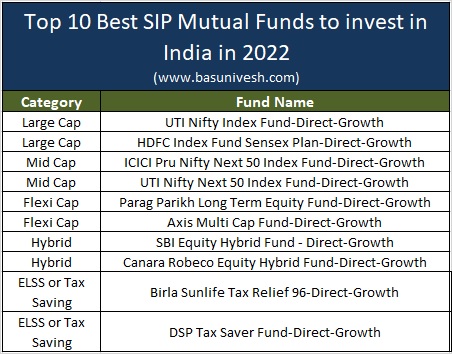
Before you invest, remember this: past returns do not guarantee future returns. The funds below are not “guaranteed winners”; they are strong candidates to research because of their category position, long-term track record, fund house reputation, or portfolio style. Always check the latest factsheet, expense ratio, riskometer, and portfolio before investing.
1. Parag Parikh Flexi Cap Fund Direct Growth
This is one of India’s most popular flexi-cap funds because it can invest across large-cap, mid-cap, small-cap, and international stocks. It suits investors who want a core long-term equity fund instead of managing too many separate funds.
2. HDFC Mid-Cap Opportunities Fund Direct Growth
A strong choice for investors looking at India’s mid-sized companies. Mid-cap funds can be volatile, but they can also create meaningful wealth over long periods. This fund is better suited for investors with at least 7–10 years of patience.
3. Motilal Oswal Midcap Fund Direct Growth
This fund has gained attention for its focused mid-cap strategy. It may suit aggressive investors who can handle sharp ups and downs. Avoid putting your entire SIP into one mid-cap fund; use it as part of a broader portfolio.
4. Bandhan Small Cap Fund Direct Growth
Small-cap funds can deliver high returns, but they also fall harder during market corrections. Bandhan Small Cap is worth researching if you want high-growth exposure and can stay invested for 10 years or more.
5. Nippon India Small Cap Fund Direct Growth
One of the well-known names in the small-cap category. It has attracted a lot of investor interest, but small-cap funds can become risky when valuations are stretched. Invest through SIPs rather than lump sum if you are entering during a heated market.
6. ICICI Prudential Bluechip Fund Direct Growth
If you want relatively stable equity exposure, large-cap funds like this can be useful. Large-cap funds usually invest in established companies and may be less volatile than mid- and small-cap funds.
7. HDFC Flexi Cap Fund Direct Growth
This fund can move across market caps and sectors, giving the fund manager flexibility. It is suitable for investors who want a professionally managed diversified equity fund for long-term goals.
8. SBI Contra Fund Direct Growth
Contra funds invest in out-of-favour opportunities. This can work very well over long periods, but it requires patience because the strategy may underperform for phases. Consider it only if you understand the style.
9. UTI Nifty 50 Index Fund Direct Growth
For many investors, a simple index fund is the smartest choice. It has low costs, tracks India’s top 50 companies, and removes the stress of choosing an active fund manager. If you are new to investing, this is one of the easiest ways to start. For more basics, read our personal finance guides.
10. ICICI Prudential Value Discovery Fund Direct Growth
This fund follows a value-investing style, looking for companies trading below their perceived worth. It can be a good diversifier if your portfolio is already heavy on growth-style funds.
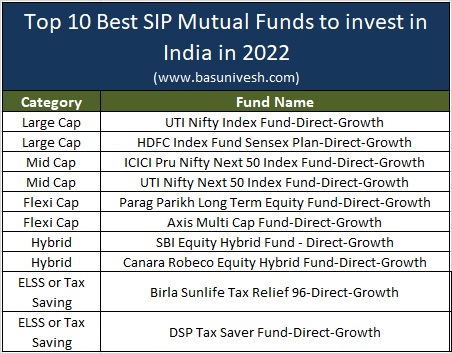
Best Mutual Funds for Long-Term Investing in India
If your goal is retirement, children’s education, buying a house, or building a 10-year wealth portfolio, focus less on short-term rankings and more on asset allocation. A practical long-term portfolio could look like this:
- 40% in index or large-cap funds for stability
- 30% in flexi-cap funds for diversified active management
- 20% in mid-cap funds for growth
- 10% in small-cap funds for high-risk, high-reward exposure
If you are conservative, reduce mid-cap and small-cap exposure. If you are young, have stable income, and can stay invested for 10+ years, you may increase them gradually. To sharpen your investing mindset, books like The Psychology of Money (check current price on Amazon) and Let’s Talk Money (check current price on Amazon) are worth reading.
Comparison: Which Mutual Fund Category Should You Choose?
| Category | Best For | Risk Level |
|---|---|---|
| Nifty 50 Index Fund | Beginners, passive investors, low-cost investing | Moderate to High |
| Flexi Cap Fund | Core long-term portfolio | High |
| Mid Cap Fund | Aggressive growth over 7–10 years | Very High |
| Small Cap Fund | High-risk wealth creation over 10+ years | Very High |
| ELSS Fund | Tax saving under Section 80C | High |
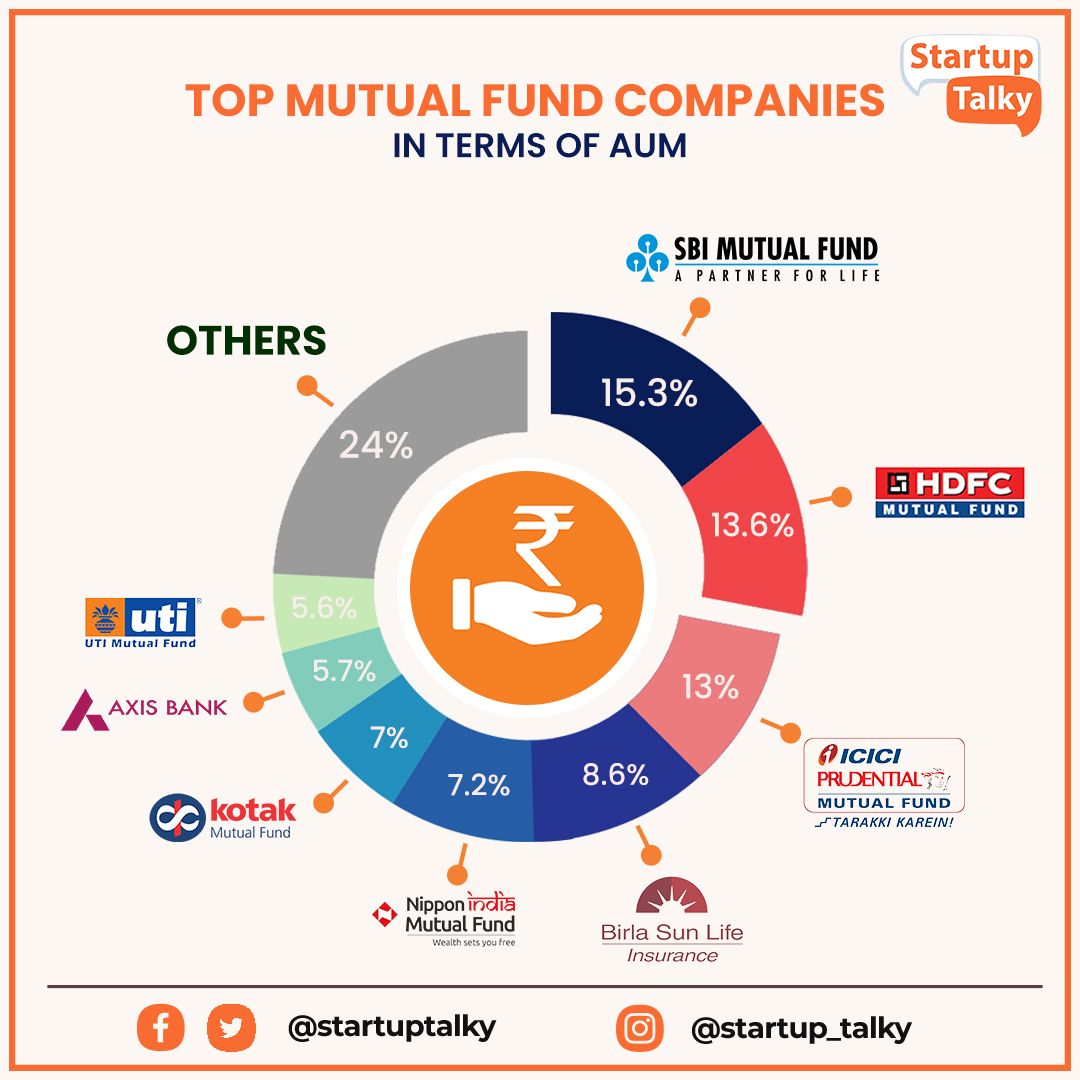
Top 5 Mutual Funds in India for a Simple Portfolio
If you do not want to manage 10 funds, keep it simple. A clean 5-fund watchlist for 2026 could be:
- UTI Nifty 50 Index Fund — passive large-cap exposure
- Parag Parikh Flexi Cap Fund — diversified core equity fund
- HDFC Mid-Cap Opportunities Fund — mid-cap growth
- Nippon India Small Cap Fund — small-cap exposure
- ICICI Prudential Bluechip Fund — large-cap active management
You do not need all five. In fact, many investors do perfectly well with 2–3 good funds. Too many funds often create overlap and make your portfolio harder to track. If you also compare financial apps or devices for tracking investments, see our smartphone buying guides for app-friendly picks.
How to Choose the Best Mutual Fund in India
Do not choose a fund only because it topped the 1-year return chart. Use this quick checklist instead:
- Check 5-year and 10-year consistency, not just recent performance.
- Compare with category average and benchmark returns.
- Look at downside protection during market crashes.
- Prefer direct plans if you are investing yourself.
- Review expense ratio; lower costs help over long periods.
- Avoid over-diversification; 3–5 funds are enough for most people.
Also, keep an emergency fund before starting aggressive SIPs. Mutual funds are powerful, but they are not a replacement for basic financial safety. You can explore more money habits in our finance section.

FAQ
Which is the No. 1 mutual fund in India?
There is no permanent No. 1 mutual fund. Rankings change every year. For long-term investors, a consistent fund like a good flexi-cap fund, large-cap fund, or index fund is usually better than chasing the latest top performer.
What are the best mutual funds to invest in India for the long term?
For long-term goals, consider a mix of Nifty 50 index funds, flexi-cap funds, mid-cap funds, and small-cap funds. Conservative investors should lean more toward index and large-cap funds, while aggressive investors can add mid- and small-cap exposure.
Which mutual fund has given the highest return in the last 10 years in India?
Historically, several small-cap and mid-cap funds have delivered very high 10-year returns. However, the highest-return fund often comes with very high volatility. Do not invest only because a fund had the best past return.
Are mutual funds safe for the next 10 years?
Equity mutual funds are market-linked, so they are not “safe” like a fixed deposit. But over 10 years, well-diversified equity funds have the potential to create strong wealth if you stay disciplined and continue SIPs through market ups and downs.
Should I invest by SIP or lump sum in 2026?
For most investors, SIP is the better choice because it reduces timing risk. If you have a lump sum, consider spreading it over 6–12 months through a systematic transfer plan, especially when markets are expensive.
Final Verdict: Best Mutual Funds to Invest in India
If you want the simplest answer, start with a Nifty 50 index fund and a strong flexi-cap fund. If your time horizon is 7–10+ years and you can tolerate volatility, add one mid-cap or small-cap fund. The best portfolio is not the one with the most funds; it is the one you can continue through every market cycle.
Best simple pick: UTI Nifty 50 Index Fund + Parag Parikh Flexi Cap Fund. Best aggressive add-on: HDFC Mid-Cap Opportunities Fund or Nippon India Small Cap Fund. Start with SIPs, review once a year, and avoid jumping funds every time rankings change.
हिंदी में पढ़ें
2026 में भारत में Invest करने के लिए Top 10 Best Mutual Funds: Long-Term Wealth के लिए Complete Breakdown
अधिकांश investors “best mutual fund in India” खोजते हैं और अंत में पिछले साल के winners की एक confusing list तक पहुँच जाते हैं। समस्या? सबसे ज़्यादा return देने वाला fund हमेशा आपके goals के लिए best fund नहीं होता। अगर आप अगले 5–10 वर्षों में serious wealth बनाना चाहते हैं, तो आपको consistency, risk control, fund category, और time horizon का सही mix चाहिए।
Quick Answer: भारत में अधिकांश long-term investors के लिए, 2026 में best mutual fund portfolio में index funds, flexi-cap funds, mid-cap funds, और small-cap funds का mix होना चाहिए। अगर आप एक simple starting point चाहते हैं, तो अपनी risk appetite के आधार पर एक Nifty 50 index fund, एक flexi-cap fund, और एक mid-cap या small-cap fund पर विचार करें।
Recommended for Indian Investors
*Affiliate link — we may earn a small commission at no extra cost to you.