
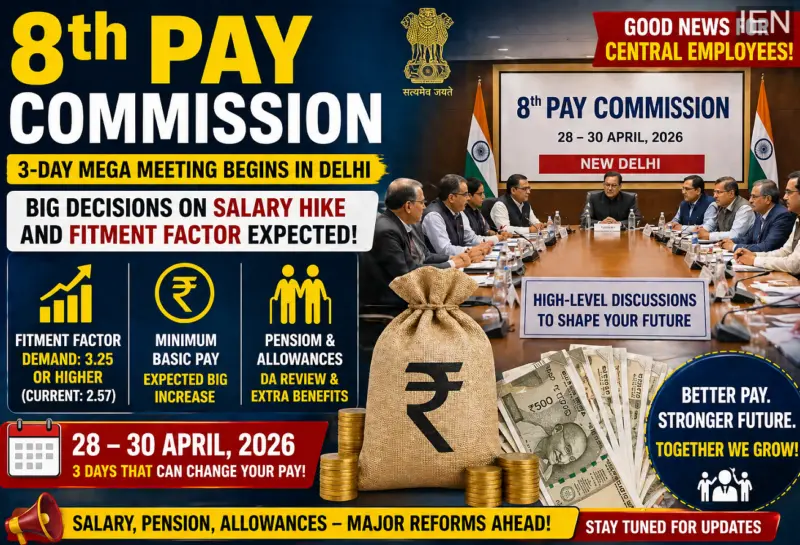
A three-day meeting in Delhi may decide the direction of pay, pension and allowances for millions of central government employees and pensioners. The 8th Central Pay Commission stakeholder meetings from April 28 to April 30, 2026 are not just routine discussions — they are the first major signal that the process is moving from announcement to serious consultation.
If you are a government employee, defence civilian staff member, pensioner or preparing for a central government job, this is the moment to watch closely. The big question is simple: does this mean the 8th Pay Commission implementation is coming soon?
| Key Detail | Current Update | Why It Matters |
|---|---|---|
| Meeting dates | April 28 to April 30, 2026 | Formal stakeholder discussions begin in Delhi |
| Location | New Delhi | Central employee unions and associations expected to participate |
| Main agenda | Salary structure, allowances, pension and service conditions | Could shape the final recommendations of the 8th CPC |
| Next step | More consultations across states planned | Implementation will depend on report submission and government approval |
1. What Is Happening In Delhi From April 28 To April 30?
The 8th Central Pay Commission is scheduled to meet employee unions, associations and other stakeholders in New Delhi from April 28 to April 30, 2026. These meetings are expected to focus on the most sensitive and widely discussed issues: salary revision, fitment formula, allowances, pension benefits and anomalies from the previous pay structure.
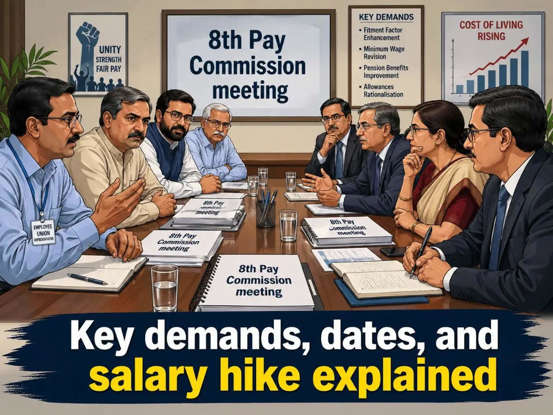
This is important because pay commissions do not work only on government files. They usually collect inputs from:
- Central government employee unions
- Defence civilian employee bodies
- Pensioner associations
- Department-level representatives
- State-level and regional stakeholders
The Delhi meetings are expected to be followed by more consultations across states, which means the process is active but still not at the final approval stage.

2. Does This Mean 8th Pay Commission Implementation Is Soon?
Not immediately — but the direction is positive. A meeting does not mean the salary hike will be credited next month. It means the commission is gathering demands, reviewing evidence and preparing the ground for recommendations.
For employees searching for “8th Pay Commission employees salary hike”, the key point is this: salary revision will happen only after the commission submits its report and the Union Government accepts the recommendations, either fully or with modifications.
Likely steps before implementation
- Stakeholder meetings and written submissions
- Review of current pay matrix, allowances and pension rules
- Drafting of recommendations by the commission
- Submission of final report to the government
- Cabinet approval and official notification
- Rollout of revised salary, arrears and pension benefits
So, the honest answer is: implementation may be getting closer, but it is not confirmed until the government issues an official notification.
3. What Salary Hike Can Employees Expect?
This is the biggest question — and also the one where rumours spread fastest. As of now, no official fitment factor or salary hike percentage has been announced for the 8th Pay Commission.
However, employee unions are expected to push for a strong revision because of inflation, cost of living, housing costs, medical expenses and the gap between entry-level and senior-level pay. The eventual hike will depend on multiple factors:
- Fitment factor used to multiply existing basic pay
- Changes in the pay matrix
- Dearness Allowance merger possibility
- Revised House Rent Allowance and other allowances
- Pension revision formula
- Government’s fiscal calculations
If you track personal finance decisions, also read our guide on smart finance planning so you do not commit to loans or big purchases based only on expected arrears.

4. BPMS 8th Pay Commission Demand: Why It Matters
Many employees are specifically searching for “BPMS 8th Pay Commission demand”. BPMS, or Bharatiya Pratiraksha Mazdoor Sangh, represents defence civilian employees and has historically raised issues related to pay anomalies, cadre restructuring, risk conditions, promotional stagnation and parity with other departments.
During the 8th CPC consultation process, employee bodies such as BPMS may raise demands around:
- Higher minimum pay
- Better fitment factor
- Risk and hardship allowance review
- Defence civilian staff parity
- Removal of pay anomalies from the 7th CPC
- Improved pension and family pension benefits
These demands do not automatically become policy, but they matter because the commission studies such submissions before making final recommendations.
5. 8th Pay Commission vs 7th Pay Commission: What Could Change?
The 7th Pay Commission introduced a new pay matrix and a fitment factor that changed how employees understood salary progression. The 8th CPC may review whether that structure is still suitable, especially after years of inflation and changes in job roles.
| Area | 7th Pay Commission | What 8th Pay Commission May Review |
|---|---|---|
| Pay structure | Pay matrix system | Possible changes in levels, cells and progression |
| Fitment | Uniform fitment formula used | New fitment demand likely from unions |
| Allowances | Several allowances revised or rationalized | HRA, transport, risk and hardship allowances may be reviewed |
| Pension | Pension revision linked to new pay structure | Pensioner groups may seek better parity and revision formula |
6. What Employees Should Do Right Now
The smartest move is to prepare, not panic. Until the government releases official recommendations and implementation orders, employees should avoid relying on viral salary calculators or unofficial WhatsApp charts.
Practical checklist
- Track official updates from government sources and recognized unions.
- Keep your latest pay slip, basic pay level and service details ready.
- Do not take a large loan assuming arrears will arrive soon.
- Review your savings, insurance and emergency fund.
- Watch for union submissions on minimum pay, fitment factor and allowances.
If you are using the expected hike to plan future investments, you may also find this useful: personal finance mistakes to avoid. For employees exploring better productivity and office workflows, see our picks on AI tools for professionals.
7. Possible Timeline: What Comes After The Delhi Meeting?
The April 28-30 Delhi meetings are part of the consultation phase. After this, the commission is expected to continue discussions with more stakeholders across different states and departments.
| Stage | Status | Employee Impact |
|---|---|---|
| Delhi stakeholder meetings | Scheduled April 28-30, 2026 | Unions present demands and concerns |
| State-level consultations | Planned | More employee groups get representation |
| Report preparation | Pending | Salary and pension recommendations drafted |
| Government approval | Pending | Final hike, arrears and effective date decided |
FAQ
When is the 8th Pay Commission meeting in Delhi?
The key stakeholder meetings are scheduled in New Delhi from April 28 to April 30, 2026. Employee unions and associations are expected to participate in discussions on salary, allowances, pension and service-related issues.
Will the 8th Pay Commission salary hike be implemented soon?
Not immediately. The meetings are a major step, but implementation will require the commission’s final report, government review, Cabinet approval and an official notification.
What is the expected salary hike under the 8th Pay Commission?
No official salary hike percentage or fitment factor has been announced yet. Any number circulating online should be treated as speculation until confirmed by the government.
What are BPMS demands for the 8th Pay Commission?
BPMS is expected to raise issues related to defence civilian employees, including pay anomalies, fitment factor, risk allowances, promotional stagnation and parity with other central government employees.
Will pensioners benefit from the 8th Pay Commission?
Yes, pension revision is usually part of central pay commission recommendations. However, the exact formula and benefit will be known only after official recommendations are released.
Final Verdict: Watch The Delhi Meetings, But Wait For The Notification
The April 28-30 Delhi meetings are a strong signal that the 8th Pay Commission process is moving forward. Employees should expect serious discussions on salary structure, allowances, pension and long-pending anomalies.
But the direct recommendation is this: do not make financial decisions based on rumours of a salary hike. Track official updates, follow recognized union submissions and wait for the final government notification. The meeting is important — but the notification will be the real turning point.
“But the direct recommendation is this: do not make financial decisions based on rumours of a salary hike.”
Prepare Smarter
*Affiliate link — we may earn a small commission at no extra cost to you.